

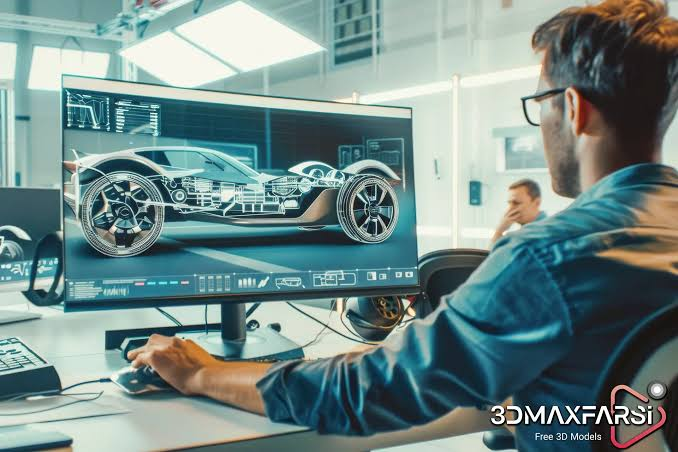
In contemporary times, visual effects projects are becoming increasingly complex. Nowadays, feature films, streaming movies, commercial advertising videos, and virtual production pipelines all require large data sets, sophisticated simulation and modeling, and photorealistic assets that impose certain infrastructure requirements. As demands grow for visual effects projects, it becomes important to maintain performance.
It is clear to business owners and production managers that any delays due to inefficient workflows will inevitably impact the budget, timeline, and result of the project. Effective scaling of visual effects operations means not only investing in the hardware but having a specific strategy that will help to deal with large projects efficiently.
The right balance of scalability and performance provides an organization with certain advantages. Iteration time is reduced, there is efficient collaboration, and render pipelines work effectively.
1. Why Scalable VFX Workflows Matter
As productions get bigger, artists have to deal with more complex scenes that consist of millions of polygons, textures, particles, and simulation data. There is no doubt that most companies use a SideFX Houdini Standard Edition workstation in order to be able to handle complicated procedural pipelines while keeping up performance at the same time.
Big productions require collaboration between various departments that create assets, run simulations, light scenes, and composite everything together. Efficient workflows make sure that the workflow won’t slow down other departments.
Scalable VFX environments also help studios respond to changing project requirements. Teams can expand resources when necessary while maintaining consistent performance across different production stages.
2. Decoupling Heavy Tasks Improves Responsiveness
Separating heavy simulations from daily creative work allows artists to focus on production without constant interruptions. Large-scale simulations, particle effects, and environment generation can consume significant computing resources when handled directly within active scenes.
Geometry caches, Alembic files, and VDB workflows help reduce the burden on interactive environments. Instead of loading every complex asset directly into a working scene, artists can use lightweight representations that maintain responsiveness.
This approach improves efficiency across the entire production pipeline. Creative decisions can be made quickly while computationally intensive processes continue independently in the background.
3. Procedural Workflows Support Larger Productions
Procedural workflows have become one of the most effective ways to scale VFX projects. Rather than manually creating every variation of an asset, artists build systems that generate content dynamically based on adjustable parameters.
This method reduces memory requirements and makes it easier to manage large environments. Changes can be applied across entire scenes without requiring artists to rebuild assets individually.
Procedural approaches also improve consistency throughout production. Teams can reuse tools and systems across multiple shots while maintaining flexibility for creative adjustments when needed.
4. Optimized Viewports Keep Artists Productive
Interactive performance plays a major role in overall production efficiency. Artists must be capable of navigating through scenes, checking their assets, and making decisions regarding them without waiting for high-quality renders of high quality at each step.
It is common practice for many VFX artists to speed up this process by using lower-resolution previews, simple assets, and hardware-accelerated viewports.
Faster viewport performance helps maintain creative momentum. Artists spend more time refining content and less time waiting for software to process changes.
5. Cloud Resources Expand Workflow Capacity
With the growing complexity of projects, local hardware may pose a limit. Work groups that employ the SideFX Houdini Karma AMD Ryzen workstations usually rely on both local performance and cloud-based computing when performing intensive computations.
Workstations in the cloud and distributed computing facilities offer access to high-performance computing capabilities when necessary. This ability becomes especially useful during periods of high workload intensity. This way, studios manage to sustain performance even with an increasing workload.
6. High-Speed Storage Eliminates Data Bottlenecks
Storage speed depends directly on the speed of the VFX pipeline. Mass production yields vast amounts of data like simulations, textures, geometry caches, and rendered frames, which have to be retrieved quickly.
NVMe storage ensures that asset loading, project saves, and file transfers do not suffer from delays. Efficient storage allows working faster and avoids any disruptions due to slow file access.
Faster storage infrastructure also supports better collaboration across teams. When assets can be accessed and shared quickly, production pipelines remain efficient throughout the entire project lifecycle.
7. AI Tools Accelerate Production Pipelines
The use of AI technology is gaining more significance within the present-day VFX process pipeline. Several tasks that have been previously done manually and took a considerable amount of time may now be accomplished with the help of AI-assisted tools more efficiently.
Automated tools for processes like rotoscoping, denoising, object tracking, and improved scene enhancement will make the process faster and result in higher-quality products. The artist gets more time for creativity thanks to such technologies.
With further development of AI technology, it will become even more efficient in scaling the production capacity of studios without a proportional increase in resources.
Building Sustainable Growth for Future Productions
Scaling of the VFX workflow is dependent on efficient processes, scalability of the infrastructure used, and good performance levels. Studios that optimize their processes will have an easier time managing even more advanced projects in the future without compromising on quality and productivity.
In comparison with providers like Puget Systems and BOXX Technologies, Cloud Ninjas has solutions designed for specific workflows that aid in matching hardware to the demanding needs of VFX projects. This may enable the studio to scale its processes with greater ease.
The world of visual effects will keep breaking technical barriers in the future. Organizations that develop efficient and scalable workflows in the present will find it easy to meet the demands of production in the coming days.
