

Introduction
Wasps are a normal part of the outdoor environment, but their behaviour becomes much more concerning when a colony establishes itself close to a home or business. A nest beside an entrance, inside a loft or near an area where people spend time can quickly turn an otherwise ordinary property into an uncomfortable place.
The challenge is knowing when a few wasp sightings have developed into a genuine pest problem.
Rather than focusing only on the number of insects you can see, it is more useful to consider where they are coming from, how frequently they appear and whether an active nest is affecting the way the property can be used.
1. A Few Wasps and an Established Nest Are Different Problems
Seeing a wasp in the garden does not automatically indicate an infestation. Wasps naturally move through outdoor spaces in search of food and suitable conditions.
A different situation develops when insects repeatedly concentrate around one part of a property.
For example, you may notice wasps flying towards a roof, entering a small gap, disappearing behind a structure or repeatedly gathering around one section of the garden.
That consistent pattern can indicate nesting activity.
Identifying the difference between occasional visitors and a nearby colony is one of the first steps in deciding whether professional pest management is necessary.
2. Why Location Makes a Difference
The position of a nest is often more important than its size.
A nest hidden in a remote garden location may create less immediate disruption than one positioned beside a frequently used front door.
Similarly, a colony near an outdoor restaurant area, school entrance, workplace or public-facing business can create a more pressing concern.
Risk can increase when:
- People frequently pass close to the nest.
- Wasps are entering an occupied building.
- The nest is positioned above a doorway.
- Outdoor areas are regularly used.
- Employees or customers are exposed to the activity.
- The nest is difficult to access safely.
This is why a professional assessment should consider the whole environment rather than simply asking how many wasps have been seen.
3. Why Hidden Nests Can Be Difficult to Deal With
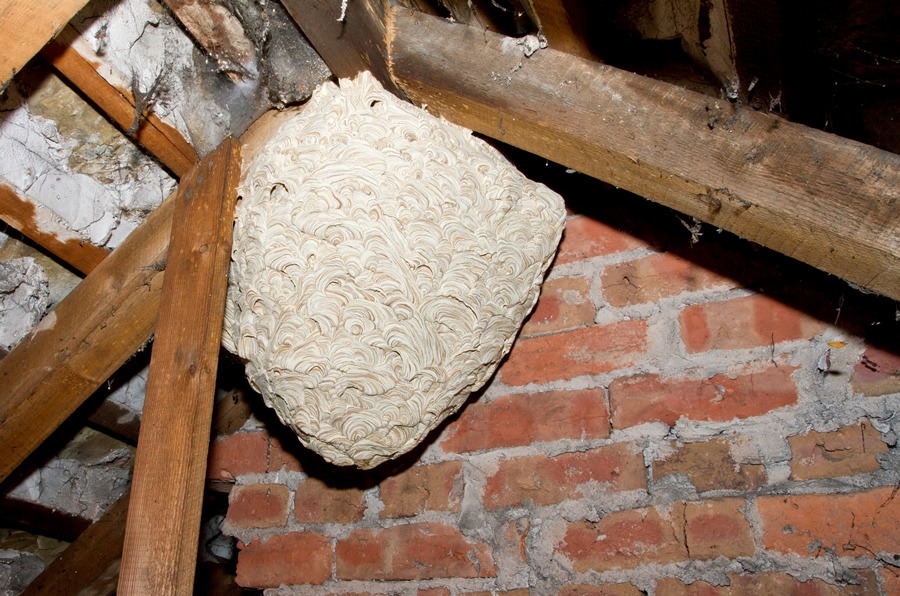
One of the most frustrating aspects of wasp problems is that the colony may be out of sight.
Wasps can use cavities and sheltered spaces within buildings. A homeowner may see insects entering through a tiny opening without knowing what is behind it.
Attempting to seal the entrance without understanding what is happening inside may not solve the issue.
Likewise, spraying individual wasps does not necessarily address the colony producing them.
A professional inspection can help establish the likely nesting location and determine what treatment is suitable for the particular property.
4. The Role of a Professional Wasp Exterminator
A professional Wasp Exterminator brings experience that can be difficult to replicate with household products.
Rather than immediately applying treatment, a technician should first assess the situation. This can include examining wasp movement, considering possible nesting locations and assessing the risks presented by the property.
Treatment decisions can then take account of accessibility, the surrounding environment and the presence of people or pets.
This approach is especially useful where the nest is concealed or difficult to reach.
Professional pest control is ultimately about managing the source of the problem responsibly, not simply eliminating insects that happen to be visible.
5. Why Businesses May Need a Faster Response
A wasp problem can have practical consequences for commercial premises.
Imagine customers sitting outside a café while wasps repeatedly fly around tables. Alternatively, employees may be reluctant to use an entrance because a nest has developed nearby.
For a business, the issue can affect comfort, customer confidence and normal operations.
Professional pest management can help businesses investigate the cause and determine an appropriate response. Commercial properties may also have their own operational requirements, making clear communication and scheduling particularly important.
6. What Makes a Pest Control Company Trustworthy?
Customers should have enough information to make an informed decision before allowing someone to treat a pest problem.
Useful indicators include:
Professional qualifications: Training and recognised pest management qualifications can demonstrate technical knowledge.
Insurance: A properly insured company provides an important level of reassurance when work is being carried out around a property.
Industry membership: Membership of an established professional organisation can indicate commitment to recognised standards.
Experience: A provider with practical experience may be better equipped to deal with unusual or concealed nesting situations.
Clear communication: Customers should understand what the technician has identified and what the proposed treatment involves.
Transparent pricing: The service and associated costs should be explained clearly before work begins.
The supplied information describes The Exterminator Pest Control as a family-operated company serving Chelmsford and surrounding Essex communities. It states that the company has BPCA membership, insurance and experience dealing with both domestic and commercial pest issues.
It also describes Rob Smith as an RSPH Level 2 qualified pest management professional and identifies Alison Smith as handling customer service and administration.
These are the kinds of verifiable service details customers can consider when comparing providers.
7. What Happens After Treatment?
Solving the immediate problem is only part of good pest management.
Customers may also benefit from understanding why the nest developed in that particular location and whether there are practical measures that can reduce the chance of future pest activity.
Depending on the circumstances, a technician may provide advice relating to property maintenance, access points and general pest prevention.
This does not mean every property needs extensive proofing work. Prevention should be proportionate to the problem and based on the conditions found during the assessment.
8. Why Professional Wasp Nest Removal Can Be Worthwhile
When a nest is close to people, trying to handle it personally can create unnecessary exposure to stings.
Professional Wasp nest removal offers a more controlled alternative because the situation can be assessed before action is taken.
The main advantages include:
- Professional evaluation of the infestation
- Better identification of concealed nesting areas
- Reduced need for homeowners to approach active nests
- Treatment based on the circumstances
- Advice about reducing future pest risks
- Support for domestic and commercial properties
A professional service can also be particularly useful when the nest is located in a difficult or inaccessible part of a building.
9. What You Can Do While Waiting for Assistance
If you have identified a suspected nest, avoid unnecessary contact with it.
Keep children and pets away from the affected area and avoid disturbing the structure. If possible, reduce access to the immediate area until the situation has been assessed.
Do not attempt to dismantle a nest simply because it appears small. Its size does not necessarily tell you how defensive the colony may become when disturbed.
When contacting a pest controller, explain where the activity is occurring and whether you have actually seen a nest. If the insects appear to be entering a wall, roof or other structure, mention this as well.
Useful information allows the company to prepare for the appointment and may help determine the urgency of the situation.
Conclusion
The decision to contact a Wasp Exterminator should not be based solely on seeing one or two insects. The more useful question is whether there is persistent activity suggesting a colony has established itself close to an occupied area.
A nest beside a doorway, within a building or near a commercial customer area deserves greater attention than occasional outdoor activity.
Professional Wasp nest removal provides an opportunity to identify the source, assess the surroundings and deal with the problem using an appropriate pest management approach. Choosing a provider with relevant qualifications, insurance, industry credentials and practical experience can provide additional reassurance.
Most importantly, avoid unnecessarily disturbing an active nest. When wasp activity becomes persistent or difficult to manage safely, professional assessment can help turn an uncertain pest problem into a clear and manageable situation.
