

American knife exhibitions are where serious hunters and collectors find blades with real personality. Makers travel from across the country to display handmade work, and you can handle each piece, test the balance, and ask exactly how it was built. If you want a benchmark for the quality worth seeking, makers like JW Steelcrafts show how steel choice, blade geometry, and finishing come together in a dependable hunting knife.
From national events in cities like Atlanta, Orlando, and Las Vegas to smaller regional exhibitions, the format is the same: one room, hundreds of knives, and the people who made them standing right behind the table. That is a rare chance to buy a custom blade with full knowledge of its materials and construction.
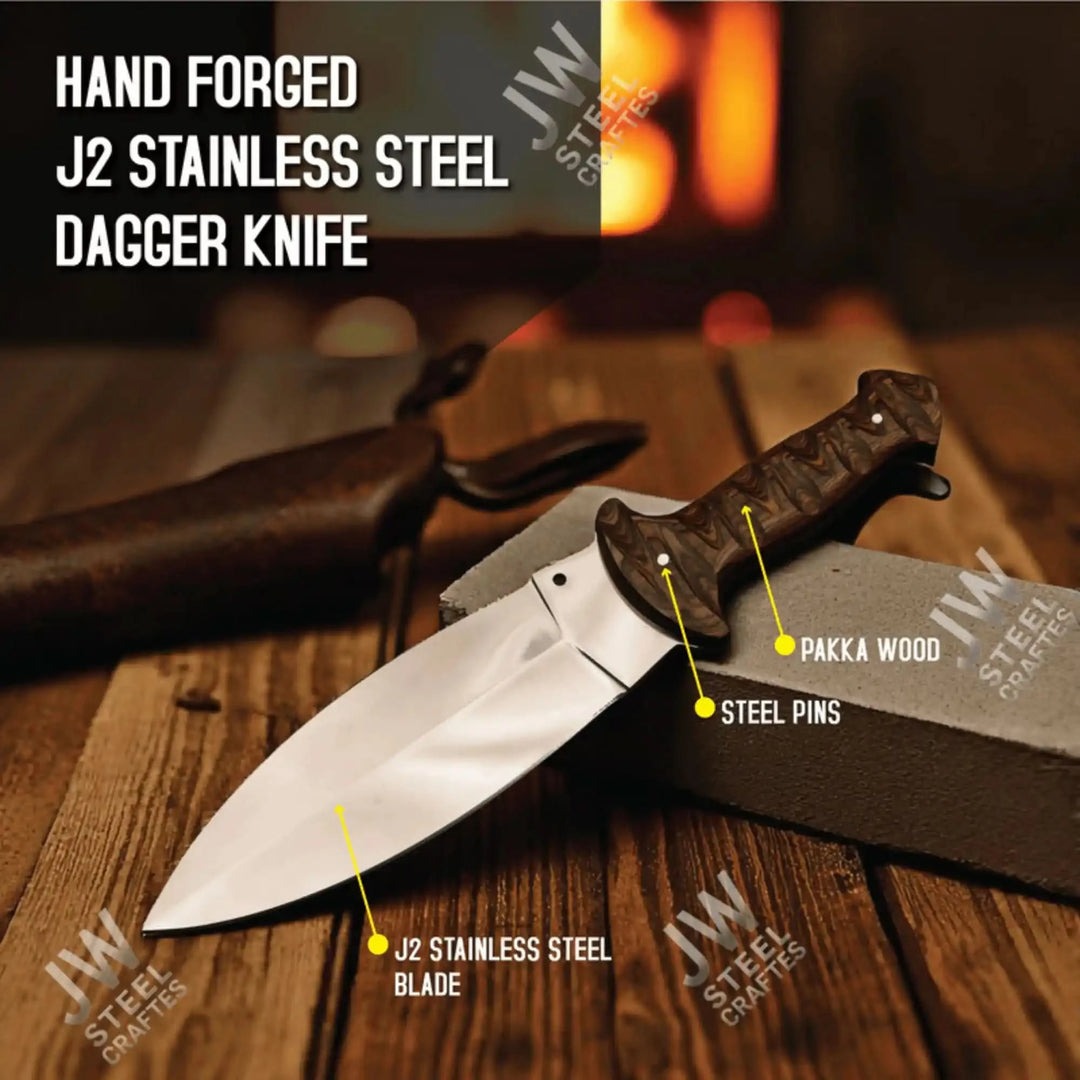
The challenge is separating true working hunters from display pieces. A good custom hunting knife needs practical geometry, quality steel, and a handle that stays secure in wet hands. A piece like this hand-forged J2 stainless knife with a pakka wood handle is a good example of how forged construction and a comfortable handle can work together. The sections below explain what to look for.
Why American Knife Exhibitions Are Ideal for Custom Hunting Knives
Talk Directly With the Knifemakers
Most custom tables are staffed by the maker. They can explain their forging process, steel selection, and heat treatment in a way no online listing can.
Handle Every Knife Before You Buy
Grip comfort, weight, and balance matter enormously during field dressing. An exhibition lets you check all three in person.
Compare Styles and Prices in One Place
Fully handmade, semi-custom, and production knives sit side by side, so you can quickly judge value. Vendors are often flexible on price, particularly late on the final day.
Commission a Knife Built for You
Many makers accept custom orders on the spot. You can choose the steel, handle material, blade length, and sheath to match the game you hunt.
Best Custom Hunting Knife Styles to Look For
Drop Point Hunters
The drop point is the most versatile hunting pattern. Its sloping spine creates a strong, controllable tip that lowers the risk of puncturing organs during field dressing, and its belly handles skinning well.
What to look for: a 3.5 to 4.5 inch blade, a thick spine, and an even grind.
Skinning Knives
A pronounced belly and shallow point separate hide from meat cleanly. Deer, elk, and hog hunters will appreciate how much faster a dedicated skinner makes the work.
What to look for: a generous curve, a thin edge, and a grippy handle.
Caping Knives
Small, precise blades of 2 to 3 inches are built for delicate work around the face, ears, and joints, especially on trophy animals.
What to look for: a fine tip and a handle that allows close-in control.
Bowie and Camp-Style Knives
Larger blades tackle camp chores alongside game processing, and they are favorites among collectors for their American heritage.
What to look for: balance for the size, a robust tang, and a quality leather sheath.
Understanding Blade Steel in Custom Hunting Knives
Ask every maker what steel they use and how they heat treat it. Their answer reveals a lot about their skill.
Stainless Steel for Low Maintenance
Stainless steels such as 440C, VG-10, S30V, 154CM, and J2 resist corrosion, which is a real advantage when cleaning game or hunting in damp conditions.
High-Carbon Steel for Toughness
Steels like 1095, 5160, and O1 take a razor edge and sharpen easily in the field, but they need regular oiling to prevent rust.
Damascus and Tool Steels
Damascus delivers striking patterns, though quality varies, so buy from reputable makers. Tool steels like D2 and CPM-3V offer excellent wear resistance but are harder to sharpen.
Best Handle Materials for Hunting Knives
Natural Materials: Wood, Horn, and Bone
Stabilized wood, ram horn, and bone give custom knives warmth and individuality. Good stabilization and finishing keep them durable.
Synthetic and Composite Materials
Micarta, G10, and pakka wood are tough, weather resistant, and comfortable in the hand. They suit hunters who want beauty with reliable everyday performance.
Hold each knife in several grips. A good handle has no hot spots or sharp edges.
How to Inspect a Custom Hunting Knife Before Buying
Quality Checklist
- Grind lines: clean and symmetrical from heel to tip.
- Fit and finish: no gaps, glue residue, or uneven pins.
- Tang: full tang with solid fasteners for strength.
- Edge: evenly ground and genuinely sharp.
- Balance: controllable and comfortable.
- Sheath: well stitched and secure.
Red Flags to Avoid
Be wary of vague answers about steel, loose handles, uneven grinds, and prices that do not match the quality.
Smart Tips for Buying at a Knife Exhibition
- Set a budget before you enter and stick to it.
- Walk the full floor first to compare makers.
- Bring cash, since it can help with pricing and some vendors skip cards.
- Ask about sheaths and care, because a good sheath is part of the knife.
- Check local knife laws on carrying and transporting blades, especially across state lines.
Final Thoughts
The best custom hunting knives at American knife exhibitions pair proven design with honest craftsmanship: a drop point or skinner profile, full-tang strength, quality steel, and a handle that stays secure in any weather. Go with a plan, ask plenty of questions, and take your time. Visit JW Steelcrafts to keep comparing handcrafted options after the show.
Frequently Asked Questions (FAQs)
What is the best custom hunting knife to buy at a knife exhibition?
A full-tang, fixed-blade drop point is the best all-around choice. It handles field dressing, skinning, and camp tasks.
Which steel is best for a custom hunting knife?
Stainless steels like S30V, VG-10, and J2 resist rust, while high-carbon steels like 1095 and 5160 are tough and easy to sharpen.
Are custom hunting knives worth the price?
For most hunters, yes. Custom knives usually offer better materials, careful heat treatment, and precise finishing, and many can be tailored to you.
What is the best handle material for a hunting knife?
Micarta and G10 are the toughest and grippiest. Pakka wood and stabilized wood offer a comfortable feel and attractive look when properly finished.
Should I choose a fixed blade or a folding knife for hunting?
Fixed blades are stronger and easier to clean, so they suit primary hunting use. A folder works well as a lightweight backup.
How much do custom hunting knives cost at exhibitions?
Prices vary widely by maker and materials, from roughly $100 for entry-level handmade work to several hundred dollars or more for premium pieces.
Can I negotiate prices at a knife exhibition?
Often, yes. Cash payment, multiple purchases, and timing late on the final day can all help.
