
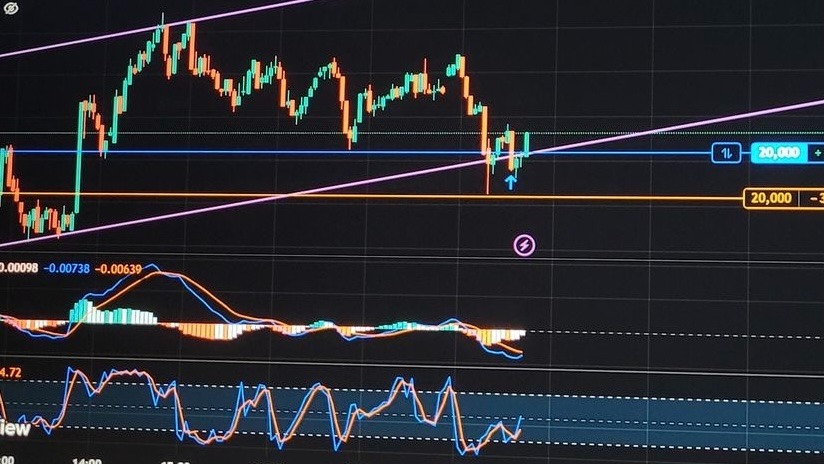
Most new traders treat every trade on Stockity like the same event, same size, same risk, same emotional intensity. And at first glance, it makes sense: binary options feel simple, clean, and symmetrical. You choose an amount, pick a direction, and watch the outcome unfold. But this illusion of simplicity is exactly what kills accounts. The market is not static, and treating every moment the same way is like driving at one speed whether you’re rolling down an empty highway or navigating a storm at midnight.
If you want to last in this high-speed environment, your risk has to breathe with the market. And that’s where the ATR (Average True Range) stops being a niche technical indicator and becomes one of the smartest tools you’ll ever add to your money-management system.
✅ Why Position Size Must Change With Volatility
Binary traders often obsess over direction, “Will the price go up or down?”, but they rarely ask a more important question:
“How dangerous is the environment I’m trading in right now?”
Volatility is the invisible force behind every rapid loss spike and unexpected candle surge. In quiet conditions, price barely moves. In chaotic conditions, it moves so violently that even perfect setups get crushed.
If you use a fixed stake, say $20, $50, or $100, your risk silently balloons during volatile periods.
The same position size that feels harmless during low ATR becomes reckless when volatility explodes.
So the solution is simple:
Position size must expand and contract as volatility rises and falls.
This ensures you always risk the same percentage of your account, even when the market gets wild.
✅ What ATR Actually Tells You
ATR was created by J. Welles Wilder, yes, the same man behind RSI.
It doesn’t tell you which direction the market will move.
It tells you how far the market is likely to move.
That single piece of information is priceless.
- High ATR → Price is swinging harder → More risk
- Low ATR → Price is compact and calm → Less risk
On a platform like Stockity, where trades can expire in 30 seconds, 1 minute, or 5 minutes, this matters even more than in traditional forex or stocks. Short-term trades magnify volatility. One sudden spike can invalidate your entire thesis.
ATR shines a spotlight on this volatility, showing you the “temperature” of the market before you commit capital.
✅ How to Use ATR for Dynamic Position Sizing on Stockity
Binary options don’t have stop-losses, so traditional position sizing formulas don’t directly apply.
But the principle remains the same:
Your stake should be smaller when ATR is high, and larger when ATR is low, while keeping your total risk at 1–2% per trade.
Imagine you have a $2,000 account and follow a 2% risk rule.
That means your max trade size is $40.
But that $40 can’t always be deployed the same way. Not if volatility is fluctuating. Here’s how you adjust:
✅ 1. High ATR (Volatile Market)
The price is jumping aggressively.
You reduce your stake to maybe 0.5%–1% of your account instead of your usual 2%.
This protects you from the “market whip”, sudden swings that often invalidate clean setups.
✅ 2. Low ATR (Calm Market)
Price is moving smoothly and predictably.
You can safely increase toward your standard 2% risk.
The goal is not to bet big in calm markets but to normalize risk across all conditions.
You’re not trying to win more, you’re making sure you don’t lose more.
✅ Why This Matters for Your Survival
The traders who blow accounts are not the ones who make bad predictions.
They’re the ones who size trades emotionally.
Fixed stakes are emotional.
ATR-based stakes are mathematical.
ATR adds a layer of discipline that compensates for human inconsistency.
Instead of relying on “feel,” you rely on measurable volatility.
This one shift alone:
- reduces drawdowns
- stabilizes psychological pressure
- smooths equity growth
- and protects you from volatility spikes that destroy otherwise good setups
It’s not sexy.
It’s not flashy.
But it’s the backbone of long-term survival in fast-expiry trading.
✅ The Question That Changes Everything
Before placing another fixed-stake trade, ask yourself:
“Is the market calm enough to justify this size?”
Or is ATR screaming that I need to back off?”
If you can start answering that question consistently, your trading transforms from reactive gambling into calculated execution.
