

Server performance is a critical consideration for any growing digital project. Websites, applications, APIs, databases, and other online services depend on reliable infrastructure to provide a smooth experience for users. For cryptocurrency-related projects, choosing the right hosting environment can be especially important because applications may need consistent connectivity, sufficient storage, and dependable availability.
A Crypto VPS can provide a flexible hosting environment with dedicated virtual resources and greater administrative control. However, performance depends on more than CPU and RAM. Bandwidth, storage, and uptime are three essential factors that should be evaluated carefully when choosing a VPS provider.
Understanding Crypto VPS Performance
A VPS operates within a virtualized environment, where computing resources are allocated to individual users. The performance of that environment depends on the resources included in the hosting plan as well as the quality of the underlying infrastructure.
A Crypto VPS can support websites, applications, development environments, databases, dashboards, and other legitimate cryptocurrency-related services. To maintain consistent performance, users should understand how bandwidth, storage, and uptime affect their particular workload.
Each factor serves a different purpose. Bandwidth determines how much data can move across the network, storage affects how quickly and efficiently data can be accessed, and uptime reflects how consistently the server remains available.
The Importance of Bandwidth
Bandwidth refers to the amount of data that can be transferred over a network within a given period. Applications with high visitor numbers, large files, frequent API requests, or data-intensive processes may require more bandwidth than simple websites.
When selecting a Crypto VPS, users should review the provider’s bandwidth allocation and understand whether there are monthly limits, fair-use policies, or additional charges for exceeding the included amount.
A project that receives moderate traffic may not require an extremely high bandwidth allowance. However, planning for traffic growth can help prevent unexpected limitations later.
Bandwidth Is Not the Same as Speed
It is important to distinguish bandwidth from network speed and latency. A high bandwidth allowance does not automatically mean that every connection will be fast.
Network latency, routing, congestion, and the quality of the data center’s infrastructure can affect how quickly data travels between the server and users.
For a Crypto VPS, reliable network connectivity can be more valuable than simply choosing the plan with the largest advertised bandwidth number. Users should consider both capacity and network quality.
Why Storage Matters
Storage is another major component of VPS performance. Applications need storage for operating system files, databases, websites, logs, software, backups, and other data.
The amount of storage required depends on the project. A basic website may need relatively little space, while a data-intensive application may require significantly more.
When selecting a Crypto VPS, users should consider both storage capacity and storage technology. Running out of storage can cause serious operational problems, while selecting unnecessarily large storage may increase hosting costs.
SSD and NVMe Storage
Modern VPS providers often offer SSD or NVMe storage. These technologies can provide faster data access than traditional hard disk drives.
Fast storage can be particularly useful for applications that perform frequent database operations or read and write large amounts of data. Faster disk access can contribute to quicker application responses and more efficient processing.
A Crypto VPS with SSD or NVMe storage can therefore be a useful option for projects where storage performance is an important part of the workload.
However, storage speed should be considered alongside CPU, RAM, application architecture, and database optimization. No single specification determines overall server performance.
Storage Capacity for Growing Projects
Storage requirements can increase as a digital project develops. Databases become larger, application logs accumulate, additional software is installed, and backup files consume space.
When choosing a Crypto VPS, users should estimate both current and future storage requirements. A server with some additional capacity can provide room for growth without requiring an immediate upgrade.
Regular storage monitoring is also important. Administrators can remove unnecessary files, manage logs, optimize databases, and review backup retention policies to keep storage usage under control.
Understanding Uptime
Uptime refers to the amount of time a server remains operational and accessible. High uptime is important for websites and applications that users expect to be available consistently.
A Crypto VPS provider should have reliable infrastructure designed to minimize unnecessary downtime. Power redundancy, network redundancy, hardware quality, monitoring, and professional data center management can all contribute to availability.
While no infrastructure can guarantee perfect availability, a provider with a strong reliability record can reduce the likelihood of extended interruptions.
What Causes Server Downtime?
Downtime can occur for many reasons. Hardware failures, network problems, software errors, maintenance, configuration mistakes, and security incidents can all affect server availability.
Some causes can be reduced through proper infrastructure and management. For example, redundant networking and reliable hardware can help minimize infrastructure-related disruptions.
Users should also maintain backups and recovery plans. Even a highly reliable Crypto VPS should not be treated as a substitute for proper disaster recovery planning.
Monitoring Uptime and Performance
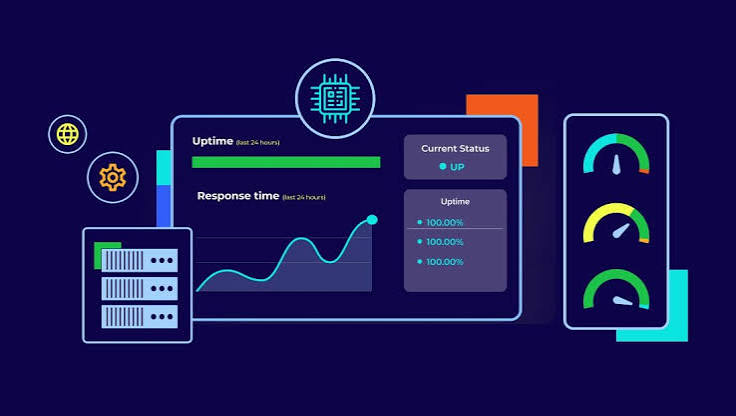
Monitoring tools can provide valuable information about server availability and resource usage. Administrators can monitor uptime, CPU consumption, memory, storage, network activity, and application response times.
Regular monitoring allows problems to be identified before they become major disruptions. For example, increasing storage usage may indicate that an application needs maintenance, while consistently high CPU usage may signal the need for optimization or additional resources.
A well-managed Crypto VPS should therefore be monitored continuously rather than only when users report performance problems.
Choosing the Right Configuration
Bandwidth, storage, and uptime should be considered together when selecting a VPS plan. A project may have plenty of storage but insufficient bandwidth, or excellent network connectivity but inadequate storage capacity.
The correct Crypto VPS configuration depends on the application’s workload. Developers should estimate expected traffic, database size, storage growth, and availability requirements before selecting a plan.
It is also useful to choose a provider that allows resources to be upgraded as the project develops.
The Role of Server Location
Server location can influence network latency and connectivity. Hosting a Crypto VPS in a data center with strong connectivity to the primary audience can help reduce unnecessary network delays.
For international applications, providers with multiple data center locations can offer additional flexibility. However, network quality and routing should be considered alongside geographic distance.
A nearby server is not automatically the best option if its infrastructure or connectivity is unreliable.
Final Thoughts
Crypto VPS performance depends on several interconnected factors, but bandwidth, storage, and uptime deserve particular attention. Adequate bandwidth helps applications handle network traffic, fast and sufficient storage supports efficient data access, and reliable uptime helps keep services available.
When choosing a VPS provider, users should evaluate resource allocations, storage technology, network quality, uptime history, data center infrastructure, monitoring options, and scalability. The goal should be to select a server that meets current requirements while leaving enough room for future growth.
With the right configuration and regular server management, a Crypto VPS can provide a dependable infrastructure foundation for cryptocurrency-related websites, applications, and modern digital projects.
