

Introduction
The Internet is in a fast-changing era, and now, for companies as well as individual users, it is more essential than ever to manage Internet access. The days of people going online to view a couple of sites are over. They analyse markets, track the businesses in the competition area, try applications, control a number of processes and gather public data from various regions. In many of those cases, your proxy server could be a handy and practical instrument.
A proxy server serves to facilitate the Internet’s requests by using another IP address rather than your own. This is useful for flexibility and can help to structure work online. For users exploring professional proxy solutions, trusted proxy store ProxyStores is a convenient place to compare different proxy types and choose options that fit specific tasks.
It is crucial to understand the working of proxies before choosing them. Not all proxies are created equal, and the right one might vary depending on your specific needs, such as speed, location variety, stable connections, or rotating IP addresses. Once you understand what the difference is between the various types of proxies, it is much easier to make use of them responsibly and effectively.
What Is a Proxy Server?
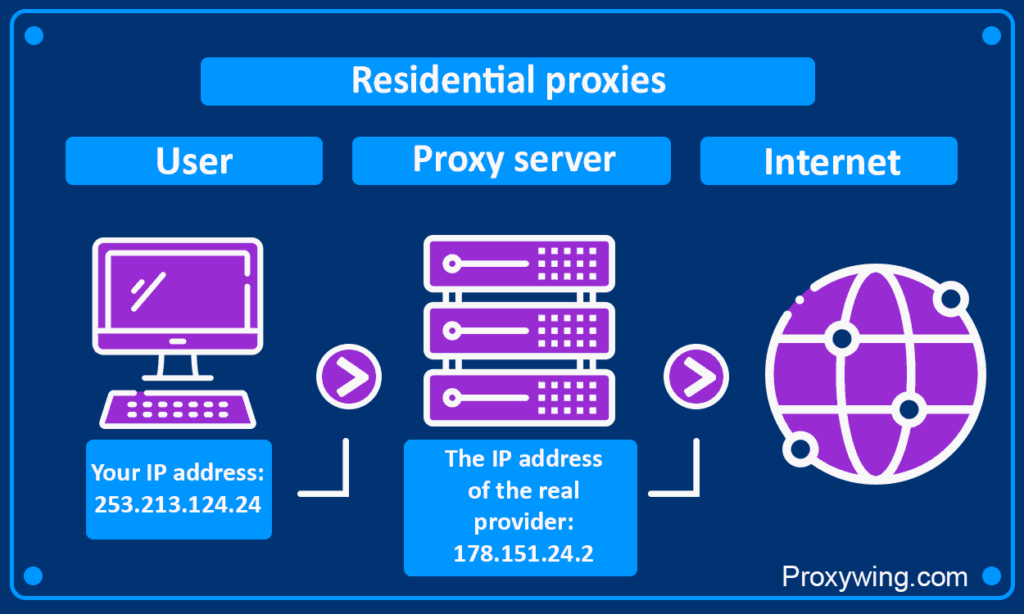
A proxy server acts as an intermediary between your device and the web pages and web services that you visit. The request is made to the proxy server before it is made to the web site or software. The proxy then relays this request and the response is sent back to you.
Simply put, the website is visited by the proxy server’s IP address and not by your IP address. It doesn’t mean that users will be invisible online, or that requests will be anonymized, but it does mean that they will have more control over what they appear to be online.
The following are some of the common uses of proxy servers:
- To better handle internet requests.To provide better control of internet requests.
- To minimize the direct exposure of an original IP address.
- to collaborate with websites from various areas
- To facilitate web research and data collection
- To schedule several jobs over different IPs
- To enhance connection management workflows in the professional workflow.
Proxy servers can be beneficial for companies for market research, quality assurance, ad verification, and testing in different regions. They can assist with privacy management, flexibility of access and browsing activities involving various locations or networks for individuals.
How Do Proxy Servers Work?
It’s a simple basic process that’s easy to learn. When you visit a website normally, your request is sent straight from your device to the website. Your IP address is seen on the site and replies. With a proxy server it’s different.
The Basic Request and Response Flow
- You make a request via a browser, application or automation.
- This request is sent to the proxy server first.
- The proxy server will use the IP of the proxy server when it forwards the request to the target site.
- The Web site returns the response to the proxy.
- That response is then passed on to you by the proxy.
This means that the target website is not directly connected to your original connection, but rather to the proxy.
Why This Matters
This is handy because it provides a greater amount of flexibility for handling Internet traffic. A proxy can be used to distribute requests, to use location-based IPs or to assign different IPs to different tasks. It can also help to improve the proxy management process for businesses that want to execute multiple online activities without going through a single connection.
Main Types of Proxy Servers
Not every proxy is created the same. The best way to do it is to pick the right proxy according to the task you want to perform.
Residential Proxies
Residential proxies are assigned IP addresses by internet service providers to actual residential devices. These addresses are linked with regular house owners, and they typically seem more natural to websites.
Where They Are Useful
Residential proxies are used for various reasons, such as:
- web research
- market analysis
- price monitoring
- Displaying search results by region
- viewing websites as a local user might see them
They will generally be preferred if there is a desire to achieve a more true-to-life connection.
Datacenter Proxies
Datacenter proxies are not based on home internet networks but rather on servers in a data center. They typically are quick, scalable and sometimes more affordable than residential properties.
The reason why they’re helpful.
Datacenter proxies can be a good fit for:
- high-volume automated tasks
- fast testing environments
- bulk requests
- performance-focused workflows
They don’t always resemble residential IPs, but they can be a good option for many software applications and business needs.
Mobile Proxies
Mobile proxies are based on IP address numbers assigned to cell phones via cell phone networks. Mobile traffic is ubiquitous and dynamic, and in particular cases, these proxies may be useful.
Where They Are Useful
Mobile proxies can be beneficial for:
- testing mobile-focused platforms
- Monitoring application or site usage on mobile networks
- social media workflows
- Actions that are specific to the region involving mobile traffic
Mobile IPs work differently from regular home or server IPs, and as such, they are reserved for special applications.
ISP Proxies
Sometimes called the static residential proxy, ISP proxies have features of both residential and datacenter proxies. They’re connected to ISP ranges and run on a server-strong basis.
Where They Are Useful
There are many reasons for choosing ISP proxies, which include:
- tasks requiring a fixed IP address
- account-based workflows
- long sessions
Activities that must be carried out regularly and in a household atmosphere
When users are looking for a more reliable and trusted IP profile, they may be a balanced choice.
Rotating Proxies
Proxies will automatically switch their IP address after a period of time or after every request. This minimizes reliance on one IP, and spreads traffic out more widely.
Where can they be useful?
Some common examples of the use of rotating proxies include:
- large-scale data collection
- The scraping of public data on the Web.
- broad market research
- Sending numerous requests to several addresses.
For projects with multiple requests, rotation can be a much more practical approach to proxy management.
Benefits of Using Proxy Servers
Proxy servers are not just for the advanced users. They address real-world online issues in a hands-on manner. Some of the top benefits.
Better Privacy Management
A proxy will lessen the direct exposure of your IP address. This can be helpful when it’s time to add an extra layer between your device and the sites you visit. It’s not a substitute for overall security measures, but it does aid in better privacy management.
IP Address Management
Different workflows are often required to be differentiated by IP address for businesses. A proxy is a way to achieve that separation in a manageable manner. Teams can direct various requests to various tools, tasks, and accounts via separate connections without sending them all through the same connection.
Location Flexibility
Certain websites present various content depending on the region. Proxies enable you to use an IP address from a specific country or city to test or utilize specific region pages, where available.
Web Research
Putting all requests through one IP is not the best way for analysts, marketers, and e-commerce teams to review the public content, monitor competitor prices and trends, or get market information.
Data Collection and Business Research
It is easier to organise public data collection if requests are sent out appropriately. This is important for companies that look at catalogs, search results, product availability or advertising visibility region-by-region.
Managing Multiple Online Tasks
Teams tend to be conducting multiple tasks simultaneously, including monitoring campaigns, checking listings, testing websites, reviewing content, and more. These requests can be split up in a better way and avoid the usage of the same IP address using proxies.
Improved Control Over Internet Requests
Proxies provide the option of more conscious web utilization. This can help with testing, breaking tasks into smaller parts, and facilitating workflow management. This is particularly helpful in a business environment for multiple systems or users who require specific connection paths.
Why Choose ProxyStores?
The ideal proxy provider should make the choice of proxy easier not harder. That’s one of the many reasons ProxyStores is a convenient platform for users who want to use different types of proxies.
A Wide Range of Proxy Types
The biggest benefit of using ProxyStores is the ability to have a variety of proxy solutions all in one location. Users need not look in various services when they are searching for proxies, they can simply look for residential, datacenter, mobile, ISP, rotating proxies depending on the work they have.
This is particularly important for businesses that might require a change of needs in the future. You can begin your team with datacenter proxies and then proceed to use residential and mobile proxies once you have specific tasks to perform.
Flexible Solutions for Different Use Cases
It’s important to remember that not all users require the same configuration. A few individuals require a few IPs for particular work. Others require more proxy pools to conduct broader research or automate tasks. This is why ProxyStores is helpful – as it offers multiple use cases and isn’t limited to just one.
Location Options
In proxy work there is variation by geography. Location flexibility has a significant impact, whether it is necessary to use IPs from a specific country, or additional countries are desired for regional testing. This is the sort of practical diversity that ProxyStores provides to enable users to match their desired tasks with the proxies they use.
Convenient Proxy Management
User-friendliness is something that is often overlooked, but is important. The quality of proxy types may be high, but its setup process and management may be complicated, which will affect the experience. The point of ProxyStores is that it’s designed to be easy to manage for real world users, even those that don’t necessarily have a background in networking.
Suitable for Different Experience Levels
There are buyers that are technical in nature. Other people are inexperienced with proxies and only need a solution that works for a definite purpose. A helpful feature is that ProxyStores aren’t too complicated to use.
Reliable Infrastructure
There are rules to be followed for using a proxy. Both businesses and professionals desire proxy access that can be maintained in a steady manner. It is not a promise any responsible provider will make but access and infrastructure are important features and part of the positive reputation which surrounds ProxyStores.
How to Choose the Right Proxy
It’s easier to pick the right proxy when you start out with the goal. The most expensive doesn’t always have to be the most advanced, and the best is not necessarily the most. It is the one that suits your work-flow.
Start With Your Purpose
- What would you like a proxy to do?
- Do you have public data that you are gathering?
- Do you have several accounts to deal with?
- Testing localised content?
- If you are using automation tools, are you?
- Doing a cross reference on ad or product listings?
Your answer will help you to focus on the best type of proxy.
Match the Proxy Type to the Task
A residential proxy is extremely helpful when the importance of the natural look of traffic is concerned.
- When speed and volume are critical, the datacenter proxy will be useful.
- Mobile proxy: helpful for tasks that require using a mobile network.
- ISP proxy: when you need a fixed, residential IP.
- Useful if a lot of requests are to be distributed among different IP addresses.
Consider Location Needs
All other things being equal, location should be one of your initial filters if you have a region-specific product. An incorrect country representative may not provide local testing, regional content review, and/or market-specific research.
Think About Rotation Requirements
Certain tasks are better performed on a fixed IP. There are others that are more efficient with rotation. If you might have many requests or requests that are large in dimensions, rotating proxies may be better. If long sessions and consistency are necessary, then a static option would be preferable.
Estimate the Number of IPs You Need
IPs may be required only by a single user for occasional research. If you have multiple workflows in a business, you may require more. It’s good to make an estimate that is realistic, not over buying or under-planning.
Balance Budget and Reliability
They are not just about price, they’re about reliability. While the very cheap proxies may be the best option on the short-term, they can cause interruptions and constant troubleshooting if they are not chosen wisely. When creating a sensible budget, it is important to consider the quality of the product, its ease of management, and its suitability for the job.
Best Practices for Using Proxies Responsibly
They may be a valuable tool, but proxy servers must be used wisely and ethically.
Keep These Points in Mind
Adhere to the rules of platforms used
- Respect legal and ethical boundaries to data collection
- Do not make too many or too excessive requests.
- Choose the correct type of proxy service for the appropriate purpose.
- Observe performance and make adjustments as necessary
Final Thoughts
There is no doubt that proxy servers are vital in the way that users are able to control their requests’ distribution, management and routing online. They can help achieve privacy, regional flexibility, testing, research and structured proxy management for multiple types of tasks.
The most critical element is to realize that various types of proxies are useful for various purposes. Each of these proxies has its advantages: Residential proxies, datacenter proxies, mobile proxies, ISP proxies, and rotating proxies have their own pros. Knowing those differences will make it much easier to make smart decisions.
If you’re looking for a single platform that offers several types of proxies, you can also consider ProxyStores as a good choice. It gives flexibility to options, location variety, practical management and a variety of options for different workflows, without bringing any unnecessary complexity into the use of proxies.
FAQs
1. What does a proxy server do?
A proxy server transmits your Internet request to a website via another IP address.
2. Which proxy is best for natural-looking traffic?
Residential proxies are frequently preferred as they are assigned with an ISP assigned IP address.
3. Are datacenter proxies good for speed?
Yes, datacenter proxies are often used for tasks that are quick and need a lot of data.
4. What is a rotating proxy?
A rotating proxy is a type of proxy that automatically rotates the IP address after a specific amount of time or number of requests.
5. Why consider ProxyStores?
Flexible options, with multiple types of proxy, and easier proxy management in one platform, ProxyStores has it all.
