

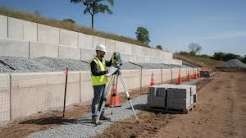
Hiring someone to build a retaining wall is not like scheduling a lawn service or arranging a paint job. These are load-bearing structures engineered to hold back earth, manage water runoff, and protect the stability of a property over decades. When something goes wrong with a retaining wall — and failures do happen — the consequences reach beyond inconvenience. They can mean foundation damage, soil erosion into neighboring properties, or significant structural repairs that cost far more than the original project.
Homeowners across the United States are increasingly taking on yard grading projects, hillside developments, and tiered landscaping — all of which require retaining walls of varying complexity. The challenge is not finding someone willing to do the work. The challenge is identifying whether the person being hired actually understands what the work requires. Most homeowners approach this vetting process informally, relying on word of mouth or online reviews alone. That approach leaves too much to chance when the stakes involve structural integrity and long-term property value.
What follows is a practical, five-step framework for evaluating contractors before any agreement is signed. It is grounded in how these projects actually function — not in theory, but in the real pressures of residential construction.
Step 1: Establish Whether the Contractor Specializes in Structural Work
General landscapers and hardscape decorators often advertise retaining wall services alongside patios, walkways, and garden borders. Some of them do competent work on low decorative borders. However, a wall designed to retain soil under pressure — especially one of significant height or placed near a structure — is not a landscaping project. It is a civil engineering task that demands knowledge of drainage systems, soil composition, load distribution, and material behavior over time.
Working with qualified retaining wall contractors who treat this as a dedicated discipline — not a peripheral service — makes a measurable difference in how a project is planned and executed. The distinction matters because a contractor who builds walls regularly will have encountered the edge cases: expansive soils, poor drainage, slope instability, and frost conditions that cause walls to shift or crack within a few winters.
How to Identify Structural Focus During Initial Contact
When reaching out to potential contractors, the nature of their questions tells you a great deal. A contractor with genuine structural experience will ask about the height and slope of the land, the soil type, proximity to structures, and existing drainage before offering any estimate. A contractor with limited experience is more likely to ask about material preference first — which stone, which block, which aesthetic — because that is where their expertise ends.
Structural focus also shows up in how they discuss permits. Walls above a certain height require engineering review and municipal approval in most jurisdictions. A contractor who does not mention permits for a substantial wall is either unaware of the requirement or is choosing to skip it, both of which are significant concerns.
Step 2: Verify Licensing, Insurance, and Permit History
Contractor licensing requirements vary by state, and in some regions, retaining wall work falls under contractor classifications that require specific credentials. Licensing is not a formality — it reflects whether a contractor has met a minimum standard of accountability in their jurisdiction. Insurance, separately, protects the homeowner in the event of worker injury, property damage, or project failure during construction.
What Documentation to Request Before a Contract Is Signed
Ask directly for a copy of the contractor’s current general liability insurance certificate, along with any applicable workers’ compensation coverage. A legitimate contractor will provide this without hesitation. Resistance or vague answers around insurance documentation should be treated as a disqualifying signal, not a minor concern.
Beyond insurance, ask how many permitted retaining wall projects the contractor has completed in the past two years. Permit history indicates real engagement with local building authorities. According to the Occupational Safety and Health Administration, excavation and earth-retention projects carry specific safety obligations, and contractors who regularly pull permits and work within regulatory frameworks tend to have a more disciplined overall approach to job site safety and project documentation.
What Unlicensed Work Actually Risks
When a wall is built without the required permits, the homeowner assumes full liability for any future issues. That includes disputes with neighbors over drainage, failed inspections when the property is sold, and out-of-pocket costs for repairs the contractor is no longer responsible for. Skipping permits may lower the upfront cost of a project, but it transfers all future risk onto the property owner.
Step 3: Evaluate Their Drainage and Site Assessment Process
The most common cause of retaining wall failure is inadequate drainage planning. A wall that retains water pressure in addition to soil pressure will fail faster and more dramatically than one built with proper drainage systems behind it. This is not a minor installation detail — it is a foundational engineering consideration that must be addressed before any block or stone is placed.
Why a Site Assessment Must Come Before an Estimate
A contractor who can give a firm quote after a brief phone call or a photo has not assessed the site properly. Retaining wall projects require an in-person evaluation of slope grade, soil composition, existing water flow patterns, and proximity to impermeable surfaces. Without that information, no accurate estimate is possible — and any figure given is likely to change significantly once work begins.
During a proper site assessment, the contractor should be observing where water currently moves across the property, identifying low points where pressure could accumulate behind the wall, and discussing the type of drainage aggregate and perforated piping that will be used in the installation. If drainage is not mentioned during the assessment conversation, that absence is a meaningful warning sign.
The Long-Term Consequences of Skipped Drainage Planning
Walls that fail due to water pressure do not always fail visibly or immediately. Gradual movement, cracking at block joints, and wall bow can develop over one to three years before a homeowner notices a problem. By that point, a contractor who was not properly insured or who operated without a contract may be unreachable. The repair cost typically exceeds the original construction cost, and the site must often be fully excavated before a new wall can be correctly installed.
Step 4: Review Past Work Through Direct Reference Checks
Online reviews provide limited information about the quality of structural work. A homeowner who found a contractor pleasant to work with and received a wall that looks good may still be living with a drainage problem that has not yet caused visible damage. Genuine vetting requires speaking directly with past clients whose projects were completed at least two to three years ago — long enough to observe how the wall has performed through multiple weather cycles.
Questions That Reveal Real Performance Over Time
When contacting references, the most useful questions are not about satisfaction or communication. They are about what happened after the project ended. Specifically:
• Has the wall shifted, bowed, or developed cracks in any section since installation?
• Were there any drainage issues — pooling, erosion, or water intrusion — during or after heavy rain events?
• Did the contractor return to address any concerns after project completion, and how promptly?
• Were permits obtained, inspected, and closed out properly by the local authority?
These questions focus on outcomes rather than impressions. They reveal whether the work has actually held up under real conditions, which is the only measure that matters for a structural installation.
Step 5: Examine the Contract for Scope Clarity and Post-Installation Responsibility
Even when a contractor demonstrates competence in every other area, the contract governs what actually happens if something goes wrong. Vague contracts expose homeowners to scope creep, undefined timelines, and disputes over what was and was not included in the original agreement. A well-structured contract for a retaining wall project should define the work in specific terms that go beyond materials and price.
What a Properly Written Scope Should Include
The scope of work should describe the wall dimensions, the drainage system to be installed behind it, the type and source of materials, how existing soil and debris will be managed, and what the site will look like upon completion. It should also include a clear payment schedule tied to project milestones — not a large upfront deposit with the remainder due upon completion, which creates uneven financial incentive for the contractor.
Post-Installation Responsibility and Warranty Language
Ask directly what the contractor warrants after installation is complete. Workmanship warranties for structural installations typically cover defects in construction technique rather than material failure, but the contract should state clearly what is covered, for how long, and how a claim is initiated. A contractor who is unwilling to put warranty language in writing is communicating something important about their confidence in their own work.
Retaining wall contractors who operate at a professional standard will not push back on contract clarity. They work from written agreements regularly, they understand what a client needs to feel protected, and they have enough completed projects to stand behind the quality of their installations over time.
Closing Thoughts
Retaining walls are long-term investments in the stability and safety of a property. The process of selecting who builds them deserves the same seriousness that homeowners bring to choosing a structural contractor for any other part of their home. The five-step framework outlined here — confirming specialization, verifying credentials, evaluating drainage knowledge, checking references on completed work, and reviewing contract language — creates a consistent standard that removes most of the guesswork from the hiring decision.
No single step guarantees a perfect outcome, but together they significantly reduce the risk of hiring someone who cannot deliver what the project requires. Homeowners who approach this process methodically tend to end up with walls that perform as expected for years without requiring corrective work. Those who skip steps often discover the consequences slowly, and at considerable cost. The framework exists because the gap between a competent hire and an inadequate one is rarely obvious until the wall has been tested by time and weather — and by then, the decision has long since been made.
