

Quantification accuracy decides the success of every construction project. As a result, a small calculation error can lead to costly overruns and delays. According to research, 5% to 15% of the total project cost is needed for construction rework. Generally, this additional cost is required due to errors in planning, measurements, and project data. In this scenario, a professional concrete estimating service saves developers from additional cost.
With a careful concrete estimation, every contractor can keep costs under control. In addition, it helps in completing projects on schedule. In short, for all residential, commercial, and industrial buildups, calculating concrete quantity with the right approach saves blowing your budget and improves bid accuracy.
Why Accurate Concrete Estimating Matters
Successful completion of the project includes the calculation of the required quantity of concrete. Out of the total construction cost, concrete material needs 10%- 30%. This quantity may be higher for complex projects. Therefore, concrete is the most common construction material in every development.
However, purchasing less concrete can stop the work. While extra material can lead to material waste and unnecessary costs. Ultimately, both situations impact the final budget. Flawless concrete estimating assists contractors in:
- Reduce waste
- Satisfy clients
- Avoid shortage
- Improve bid accuracy
- Control material costs
- Optimize labor cost
- Ensure profit margins
- Schedule delivery
Start With the Construction Drawings
Start the estimation with a critical analysis of the project drawings and other specifications. Before final calculation, and no matter what, the project is like doing Commercial Estimating services or residential estimating services, the estimator should consider:
- Footings
- Grade beams
- Foundation dimensions
- Slab thicknesses
- Columns
- Walls
- Stairways
- Curbs and gutters
- Retaining walls
After a detailed analysis of all these items, an estimator can proceed to the next steps.
Quick Concrete Estimating Checklist
| Step | What to Check | Why It Matters |
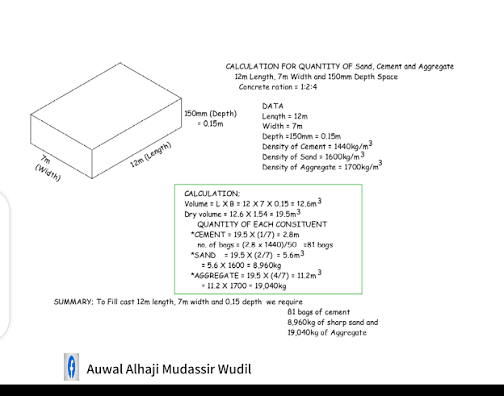
| Calculate Volume | Use Length × Width × Thickness | Determines the required concrete quantity. |
| Break Down the Project | Measure slabs, footings, walls, columns, and sidewalks separately | Improves accuracy and reduces takeoff errors. |
| Include Waste Allowance | Consider Spillage Over-excavation Pumping losses | Helps prevent material shortages and project delays. |
| Review Reinforcement | Must take a look at Rebar Wire Mesh, Embedded items | Provides a more complete cost estimate. |
| Check Thicknesses | Confirm slab, wall, and footing dimensions from drawings | Small thickness changes can increase material requirements. |
| Assess Site Conditions | Review soil as well as access, weather, and pumping requirements | Site factors directly affect costs and productivity. |
| Use Digital Takeoff Tools | Leverage estimating software for measurements and calculations | Saves time and improves consistency. |
| Double-Check Everything | You should review dimensions and must and many other factors, conversions, revisions, and quantities | Prevents costly estimating mistakes before bidding. |
Main Steps for Concrete Estimating
Use a basic formula for calculating concrete volume. Convert the values from cubic feet into a standard unit, cubic yards. At this point, accuracy is very important to avoid small errors. A premium tip is to divide the takeoff into smaller sections such as slabs, footings, walls, columns, and more. It reduces the chances of mistakes and makes calculations easier.
Another important point is to consider material waste. In fact, spillage, uneven subgrades, pumping losses, and formwork issues can affect actual concrete requirements. To avoid this, the best way is to add a waste allowance. It keeps the project away from being delayed.
Consider All Cost Factors
Adding a concrete estimate does not complete the quantification alone. Additional material, such as rebar, wire mesh, and embedded items, is also necessary to consider. Moreover, it is the requirement of perfect estimation to check slab, wall, and footing thicknesses carefully. This is because even a small increase can add a high concrete volume.
Among these factors, one can not ignore the site condition. The reason is that soil quality is the additional factors that impact final costs and productivity.
Use Technology, But Verify Everything
Use of software is the core part of transparent estimation. After all, it ensures accuracy by helping estimators measure plans and calculate quantities. But professional judgement is highly recommended before finalizing the quantity takeoffs. Today, many firms, such as residential estimating Services or commercial estimating services, use the same principle before finalizing any calculation.
For enhanced reliability, double-checking the dimensions, unit conversions, drawing revisions, and waste allowances is equally important. It’s better to prefer a senior estimator for a final review. It helps in removing technical mistakes that might be the hidden cause of reduced profit.
Final Thoughts
Concrete estimating is an important part of controlling costs and avoiding budget overruns. It starts with carefully reviewing drawings & specifications, followed by accounting for waste, considering site conditions, and checking every calculation. With all these considerations, contractors can improve bid accuracy and reduce costly surprises.
